The Rise of Technology in Early Education in Qatar
In recent years, early education in Qatar has gone through a noticeable transformation. Parents searching for the Kindergartens in Qatar are no longer looking only at facilities, safety, or curriculum. Today, technology plays a major role in how children learn, interact, and grow.
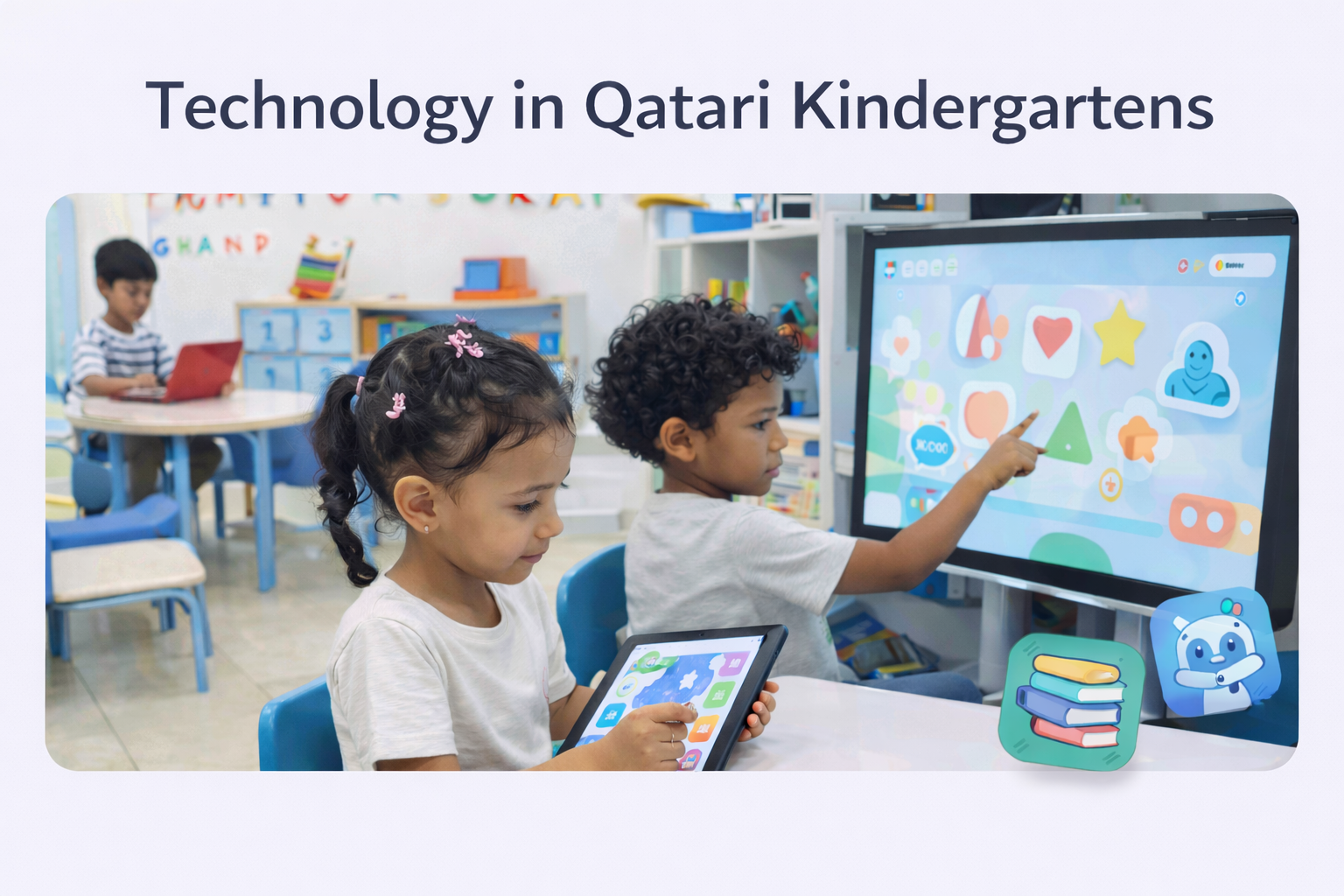
From interactive smart boards in classrooms to child-friendly educational apps, technology in kindergartens Qatar is reshaping the way young children experience learning. Schools in Doha and across the country are adopting modern tools to support creativity, language development, and problem-solving skills from a very early age.
This shift is not happening in isolation. It is closely aligned with Qatar National Vision 2030, which places strong emphasis on digital transformation and high-quality education. As a result, both private and international schools are investing in early childhood education technology to prepare children for a rapidly evolving world.
But what does this really mean for your child? And how can parents make the right choice when selecting a kindergarten?
Let’s explore.
What Does “Smart Kindergarten” Really Mean?
The term “smart kindergarten” is becoming more common, especially among the Kindergartens in Qatar. But it does not simply mean adding tablets or screens in classrooms.
A smart kindergarten is a learning environment where technology is used in a balanced and purposeful way to support child development.
Key features include:
- Interactive learning tools instead of passive screen time
- Digital resources that support both Arabic and English learning
- Tools that encourage creativity, not just consumption
- Systems that help teachers track student progress
In Qatar’s multicultural classrooms, this approach is especially useful. Children come from different linguistic and cultural backgrounds, and technology helps bridge those gaps through visual, audio, and interactive content.
In simple terms, a smart kindergarten uses technology as a tool—not a replacement—for good teaching.
Smart Classrooms in Qatar: What Do They Include?
Many modern schools in Doha are now equipped with smart classrooms Qatar, designed to make learning more engaging and interactive.
1. Interactive Smart Boards
Instead of traditional whiteboards, many classrooms use smart boards. These allow teachers to:
- Show videos and animations
- Draw and write digitally
- Involve children in interactive activities
For example, a teacher can turn a simple alphabet lesson into a fun activity where children drag and drop letters on the screen.
2. Tablets and Learning Devices
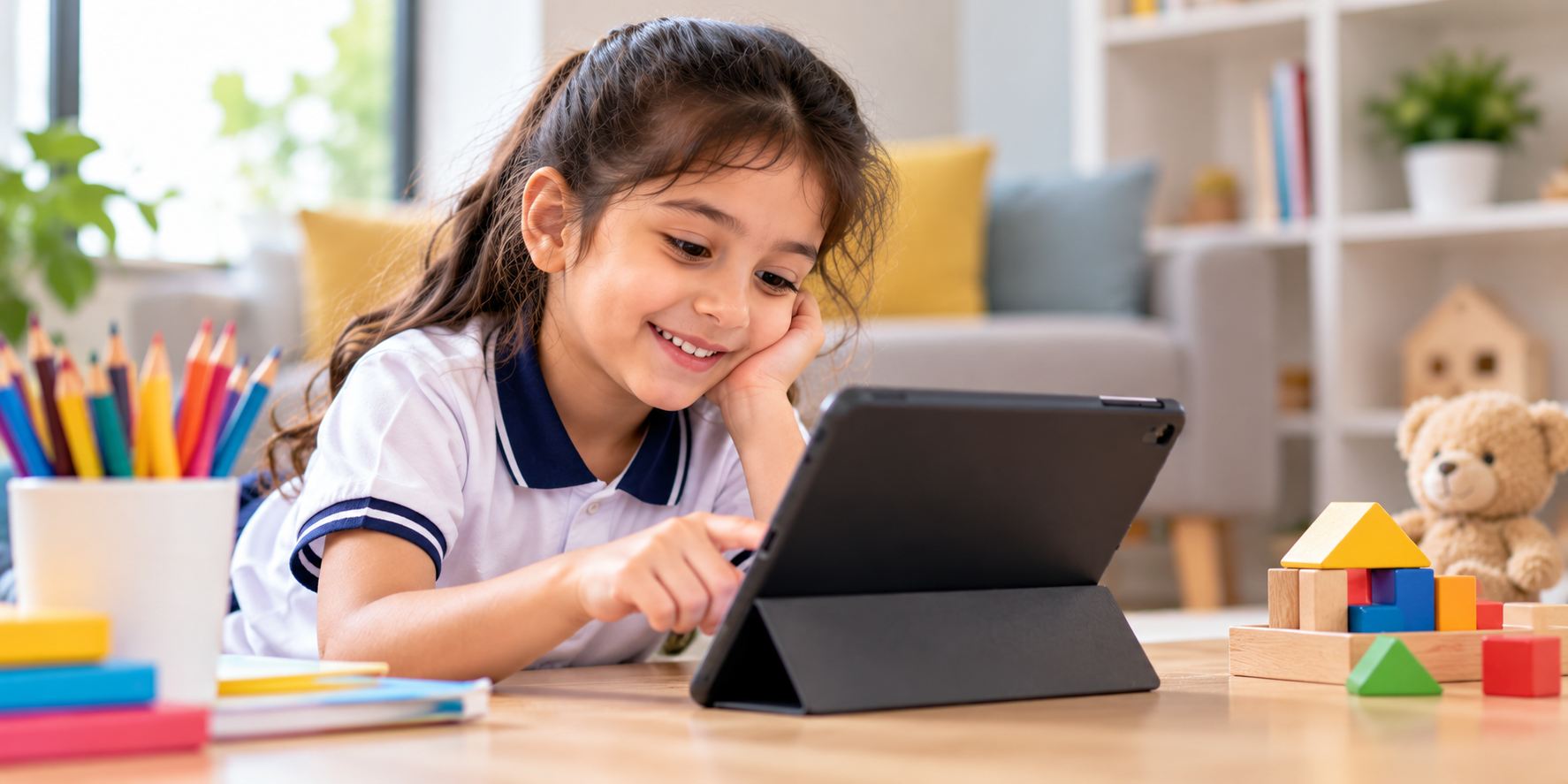
Some kindergartens provide tablets for guided activities. These are not used all day but are integrated into specific lessons.
Children may use them for:
- Phonics and reading exercises
- Simple math games
- Creative drawing apps
3. Audio-Visual Learning Tools
Young children learn best through visuals and sounds. Smart classrooms often include:
- Educational videos
- Music-based learning
- Storytelling with animations
This is especially helpful in bilingual environments where children are learning both Arabic and English.
4. Digital Attendance and Communication Systems
Technology is also used behind the scenes. Many schools now use apps or portals for:
- Attendance tracking
- Daily updates for parents
- Sharing photos and progress reports
This improves transparency and keeps parents more involved.
Role of Educational Apps in Early Learning
One of the biggest changes in preschool technology Qatar is the use of educational apps designed specifically for young children.
These apps are not just games—they are carefully designed learning tools.
Popular uses include:
- Learning letters and sounds
- Practicing numbers and counting
- Developing fine motor skills
- Encouraging creativity through drawing and storytelling
Examples of app categories used in Qatar:
- Phonics apps (for English and Arabic)
- Math games for early learners
- Interactive storybooks
- Creativity apps like drawing and music tools
Many schools carefully select apps that align with their curriculum. The goal is to support digital learning kindergarten in a way that feels natural and engaging for children.
For parents, this also creates continuity between school and home. Children can use similar apps at home for reinforcement.
How Technology Supports Teachers and Parents
Technology is not only for students. It plays a major role in supporting teachers and improving communication with parents.
For Teachers
Teachers in modern kindergartens use digital tools to:
- Plan lessons more efficiently
- Track student development
- Personalize learning activities
For example, if a child needs extra help with phonics, teachers can assign specific digital activities tailored to that child.
For Parents
Parents benefit from increased visibility into their child’s day.
Many schools in Qatar offer apps or platforms where parents can:
- Receive daily updates
- View photos and classroom activities
- Communicate directly with teachers
- Track learning progress
This creates a strong partnership between school and home, which is essential in early childhood education.
Benefits of Technology in Kindergartens
When used correctly, technology in kindergartens Qatar offers many benefits.
1. Improved Engagement
Children are naturally drawn to interactive content. Technology makes learning more exciting and enjoyable.
2. Personalized Learning
Each child learns at a different pace. Digital tools allow teachers to adapt lessons based on individual needs.
3. Better Language Development
In Qatar’s bilingual environment, technology helps reinforce both Arabic and English through audio and visual content.
4. Development of Digital Skills
Basic digital literacy is becoming essential. Early exposure helps children become comfortable with technology in a healthy way.
5. Stronger Parent Involvement
With digital communication tools, parents stay informed and involved in their child’s development.
Challenges and Concerns (Screen Time, Balance, etc.)
While there are many benefits, it is important to address concerns around early childhood education technology.
1. Screen Time Limits
Too much screen time can affect attention span and physical activity.
Most quality kindergartens in Qatar follow structured guidelines, ensuring that technology is used in short, purposeful sessions.
2. Need for Balance
Technology should never replace:
- Physical play
- Social interaction
- Hands-on learning
The best schools maintain a balance between digital and traditional activities.
3. Teacher Training
Technology is only effective when teachers know how to use it properly. Schools must invest in regular training.
4. Over-Reliance on Devices
Children should not become dependent on screens for learning. Technology should support—not dominate—the classroom experience.
How Qatar is Adopting Digital Learning in Early Education
Qatar has made strong progress in integrating technology into education.
Government initiatives and private sector investments are driving this change.
Key trends include:
- Integration of digital tools in early years curriculum
- Investment in modern school infrastructure in Doha
- Focus on innovation in education under Qatar National Vision 2030
- Growth of international schools with advanced learning systems
Many of the Kindergartens in Qatar are leading this shift by adopting global best practices while maintaining local cultural values.
What Parents Should Look for in Tech-Enabled Kindergartens
Choosing the right kindergarten is a big decision. When evaluating technology in kindergartens Qatar, parents should focus on quality—not quantity.
Key things to check:
- Is technology used in a balanced way?
- Are teachers trained to use digital tools effectively?
- Does the school combine digital and physical learning?
- Are there clear screen time guidelines?
- Does the school support bilingual learning (Arabic and English)?
Red flags to avoid:
- Excessive use of screens without clear purpose
- Lack of outdoor or physical activities
- No communication system for parents
The goal is to find a school where technology enhances—not replaces—traditional learning.
Future of Kindergartens in Qatar
The future of early education in Qatar is clearly digital—but also balanced.
We can expect to see:
- More personalized learning experiences
- Greater use of AI-powered educational tools
- Stronger integration between school and home learning
- Continued focus on bilingual and multicultural education
At the same time, there will be increasing awareness of the importance of play, creativity, and social development.
The Best Kindergartens in Qatar will be those that successfully combine technology with strong educational foundations.
Frequently Asked Questions
1. Are smart classrooms good for kindergarten kids?
Yes, smart classrooms can be very beneficial when they are used in the right way. At the kindergarten level, children learn best through interaction, movement, and play. Smart tools like interactive boards and guided apps can enhance this by making lessons more visual and engaging.
For example, instead of just listening to a teacher explain letters, children can touch and move letters on a screen, hear sounds, and see animations. This helps improve memory and understanding.
However, the key is balance. The best kindergartens in Qatar use technology as a support tool—not the main method of teaching. Traditional play, storytelling, and social interaction remain essential.
2. How much screen time is safe for young children?
Screen time should always be limited and purposeful, especially for children aged 3–6.
In high-quality kindergartens in Qatar:
- Screen use is usually short (10–20 minutes per session)
- It is guided by a teacher, not unsupervised
- It is part of a structured lesson, not free play
At home, parents should also follow similar guidelines. Experts generally recommend:
- No passive screen time for long periods
- Focus on educational and interactive content
- Balance with outdoor play, reading, and creative activities
The goal is not to eliminate screens—but to use them wisely.
3. What apps are used in Qatar kindergartens?
Kindergartens in Qatar carefully select apps that support early learning and match their curriculum.
Common types of apps include:
- Phonics apps (for English and Arabic letter sounds)
- Math apps (counting, shapes, simple problem-solving)
- Interactive storybooks (with audio and animations)
- Creative apps (drawing, music, and storytelling tools)
Some international schools may use globally recognized platforms, while others use custom or curriculum-based apps.
What matters most is that these apps are:
- Age-appropriate
- Easy to use
- Focused on learning, not just entertainment
4. Is technology replacing teachers?
No, and it should never do so.
Teachers play the most important role in early childhood education. Technology is simply a tool that helps them teach more effectively.
In fact, in modern classrooms in Qatar, teachers are more important than ever because they:
- Guide how technology is used
- Ensure children stay engaged and focused
- Provide emotional support and social learning
- Adapt lessons to each child’s needs
A tablet or smart board cannot replace human interaction, encouragement, or classroom management. The best schools understand this clearly.
5. Are tech-enabled schools more expensive in Qatar?
In many cases, yes—but not always.
Premium international schools in Doha often invest heavily in advanced technology, which can increase tuition fees. However, many mid-range schools are also adopting smart tools without significantly raising costs.
Parents should not choose a school based only on how “high-tech” it looks. Instead, focus on:
- Teaching quality n- Curriculum
- Balance between digital and traditional learning
Technology should add value—not just increase price.
6. Do children still play in tech-enabled kindergartens?
Absolutely. Play is a core part of early childhood education and cannot be replaced by technology.
The best kindergartens in Qatar ensure children have plenty of time for:
- Outdoor play
- Physical activities
- Social interaction with other children
- Creative play (building, drawing, role-playing)
Technology is only one part of the day. A well-balanced school schedule always prioritizes physical and social development.
7. How can parents support digital learning at home?
Parents play a key role in reinforcing what children learn at school.
You can support digital learning by:
- Using the same or similar educational apps recommended by the school
- Setting clear screen time limits
- Sitting with your child during app use and guiding them
- Combining digital learning with offline activities (reading books, drawing, puzzles)
For example, if your child learns letters through an app, you can follow up with writing or drawing activities at home.
Consistency between school and home helps children learn more effectively.